Digital precision creates
structural sustainability

SYSTABUILD supports the digitalisation of a sector where material use, rework and process quality are central ESG factors. CSR is an integral part of the business model: software makes processes more efficient, transparent and easier to steer – and structurally contributes to more sustainable value creation.

Digitalisation reduces friction losses

Construction and trades processes are resource-intensive: material waste, fragmented workflows and inefficient procedures drive up cost and ecological footprint.

Digital precision changes this mechanic – through accurate quantity calculation, structured planning data and end-to-end workflows.

SYSTABUILD anchors this impact via the partner companies in the daily processes of their industries – as a result of specialised software, not a downstream CSR measure.

Reducing the ecological footprint through digitalisation is part of our mission – and a valuable contribution to society, the construction sector and more sustainable processes. Sustainability emerges precisely where it is economically most effective: in the business-critical processes of construction and trades.

Platform impact

Sustainability across the value chain
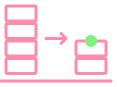
Material efficiency

Digital planning and more precise manufacturing data can reduce offcuts, overproduction and rework – from timber framing to industrial component fabrication and on to the building site.

Resource transparency

Digital models create the data foundation for quantity calculation and material documentation – and thus a robust basis for decisions in planning and procurement.

Process integration

End-to-end workflows reduce duplication, media breaks and unnecessary coordination. That saves time, improves quality and supports more efficient resource use in everyday operations.


ESG impact along the business model

ESG requirements are a growing factor for the construction and trades sector – not only as a compliance topic but as an indicator of future viability, risk management and sustainable value development.

SYSTABUILD supports this development through a digitalisation mission that connects efficiency, transparency and ESG relevance. The group addresses sustainability impact precisely where construction and trades processes are particularly material-, time- and resource-intensive.

ESG relevance therefore does not emerge in parallel to the business model, but through the business model itself – as part of a responsibly growing software group. This stance also applies internally: responsible action is part of the group's shared self-understanding – most recently reflected in a group-wide HR foundation for fair and consistent standards.

Impact through concrete examples

The following examples show how software in the SYSTABUILD ecosystem can contribute to more resource-efficient, more efficient and more traceable processes. The impact does not come from sweeping sustainability promises but from concrete operational levers.

Digital precision in timber construction

SEMA supports digital planning and manufacturing processes in timber construction. More precise planning and material data can reduce offcuts and support more CO₂-aware building.

Efficiency in component manufacturing

Acies addresses specialised manufacturing processes. Production control, variant logic and better data availability can reduce scrap, rework and process losses.

Transparency in the operational construction process

SORBA creates transparency over resources, services, documentation and billing. This traceability supports more efficient site processes and better operational steering.

Precision in planning and reinforcement

GLASER supports precise planning and reinforcement processes. The ESG-relevant contribution arises through better data foundations, fewer media breaks and higher planning quality.

Making sustainability visible

SYSTABUILD positions the sustainability impact of digitalised construction and trades processes where it concretely shows – through more precise planning, more efficient material use or reduced rework in the group.

This impact varies depending on the process and market segment. The focus is therefore not on a uniform promise but on the concrete improvement of individual process steps along the value chain.

Transparency is part of the ESG logic

The group does not communicate unsupported CO₂ savings, but what is already proven: the switch to 100% renewable electricity has already reduced the group's direct and energy-related CO₂ emissions from 909 to 573 tonnes – significant progress that is also clearly reflected in the group's ESG score.

At the same time, communication remains deliberately substance-oriented: impact is only reported once it can be reliably derived.

Efficiency as the foundation of sustainable value creation

{ SYSTABUILD combines specialised software with structural impact: digital planning, integrated workflows and transparent data create the basis for more efficient, more resource-aware and better-steerable processes in construction and trades.}